Marek
Marek A Walk Through San Francisco: From Sore Feet to Street Realities
Remember my shoe problem?
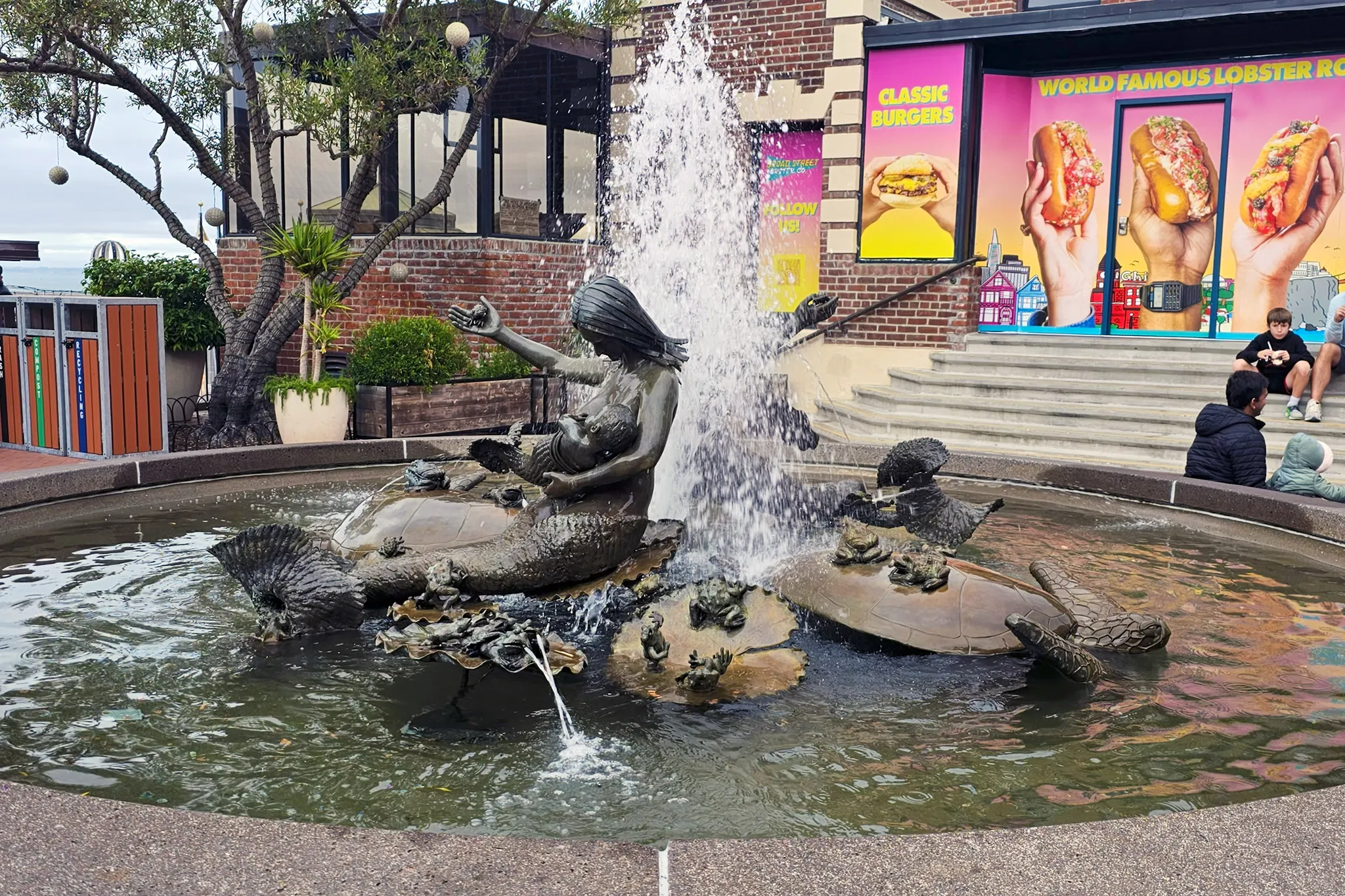
Right after a stroll along Fisherman’s Wharf — where the scent of grilled crab mingles with the salty breeze and seagulls scream overhead — I set out to find a store where I could buy some comfortable shoes. Google, as always, comes to the rescue. But oddly enough, within walking distance (a few kilometers), I see only one option on the map. Most shopping centers I’ve passed so far are completely shut down. I’m surprised. Is retail dying in San Francisco?
The only stores that seem to be thriving are the countless souvenir shops scattered along the waterfront promenade. But none of them sell what I need. So I head deeper into the city. I decide to walk — a mix of necessity and curiosity. I’ll see more of San Francisco this way.
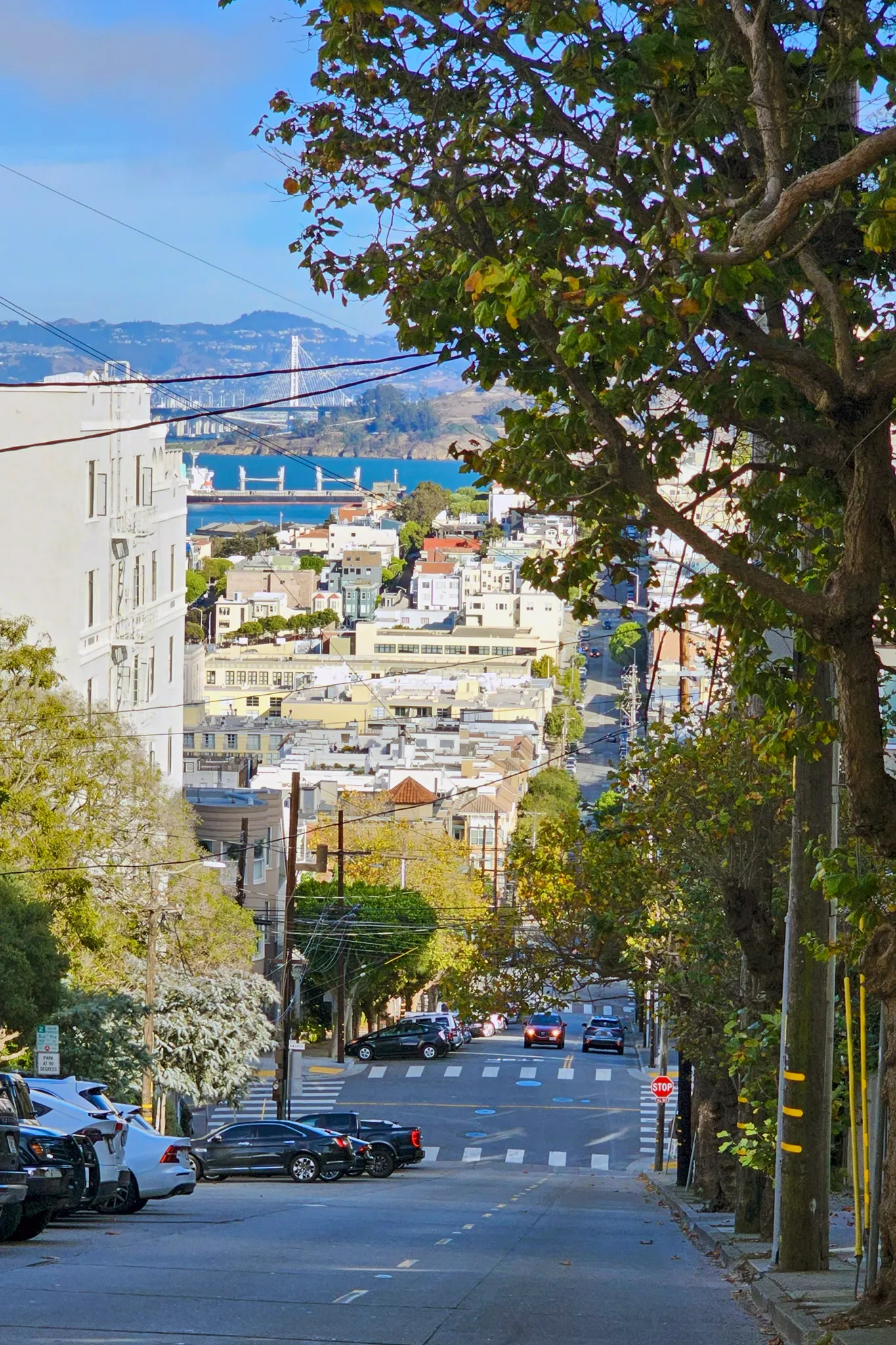
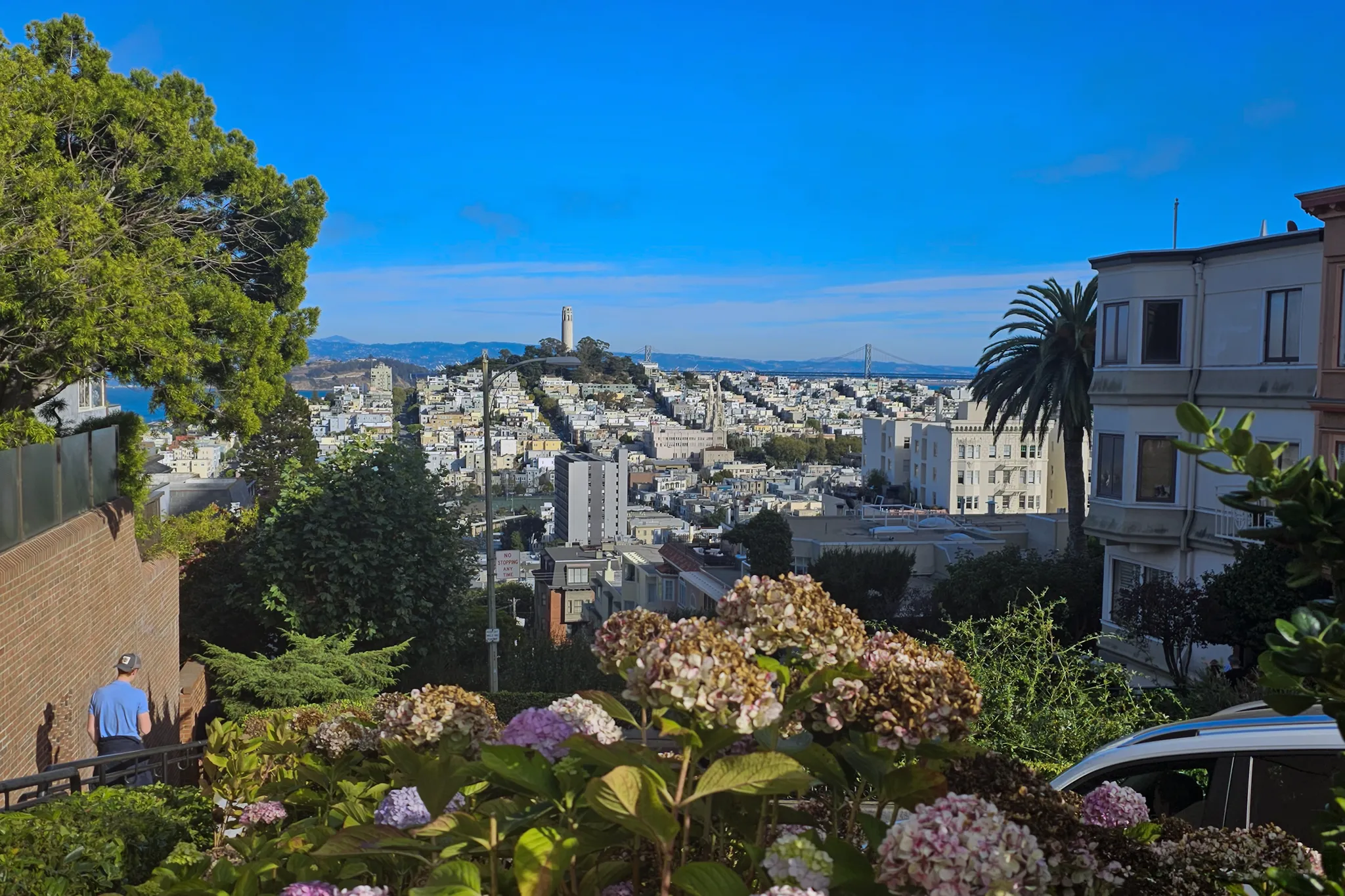
The store I’m heading to is located on Lombard Street — the city’s most famous road. What quickly becomes apparent is that its touristy charm ends the moment I pass the iconic zigzag section, too steep for cars to drive straight. Beyond that, the street loses its postcard appeal. I pass shuttered storefronts, closed restaurants, entire blocks of boarded-up businesses. I wonder if Beck’s Shoes still exists.
Later, my family — whom I’m visiting here — tells me that many stores have closed due to rising crime and the police’s inability to effectively deal with it.
My feet are aching more with each step. It looked so close on the map, but I’m still far from the store, walking through increasingly rundown neighborhoods. One thing comforts me: despite the surroundings, it doesn’t feel unsafe. When I finally reach Beck’s Shoes, I’m dreaming of sitting down and giving my feet a break. The store, unlike its surroundings, looks like it’s doing well. No surprise — it might be the only place of its kind in the entire city.
The service is excellent. One of the staff members immediately approaches to help me choose the right pair. I don’t need help, though — as soon as I walk in, my eyes land on a pair of Brooks running shoes. It’s the first and only pair I try on. No need to look further.
190 dollars later (worth every cent), I’m ready to continue my journey.
New shoes, new perspective.
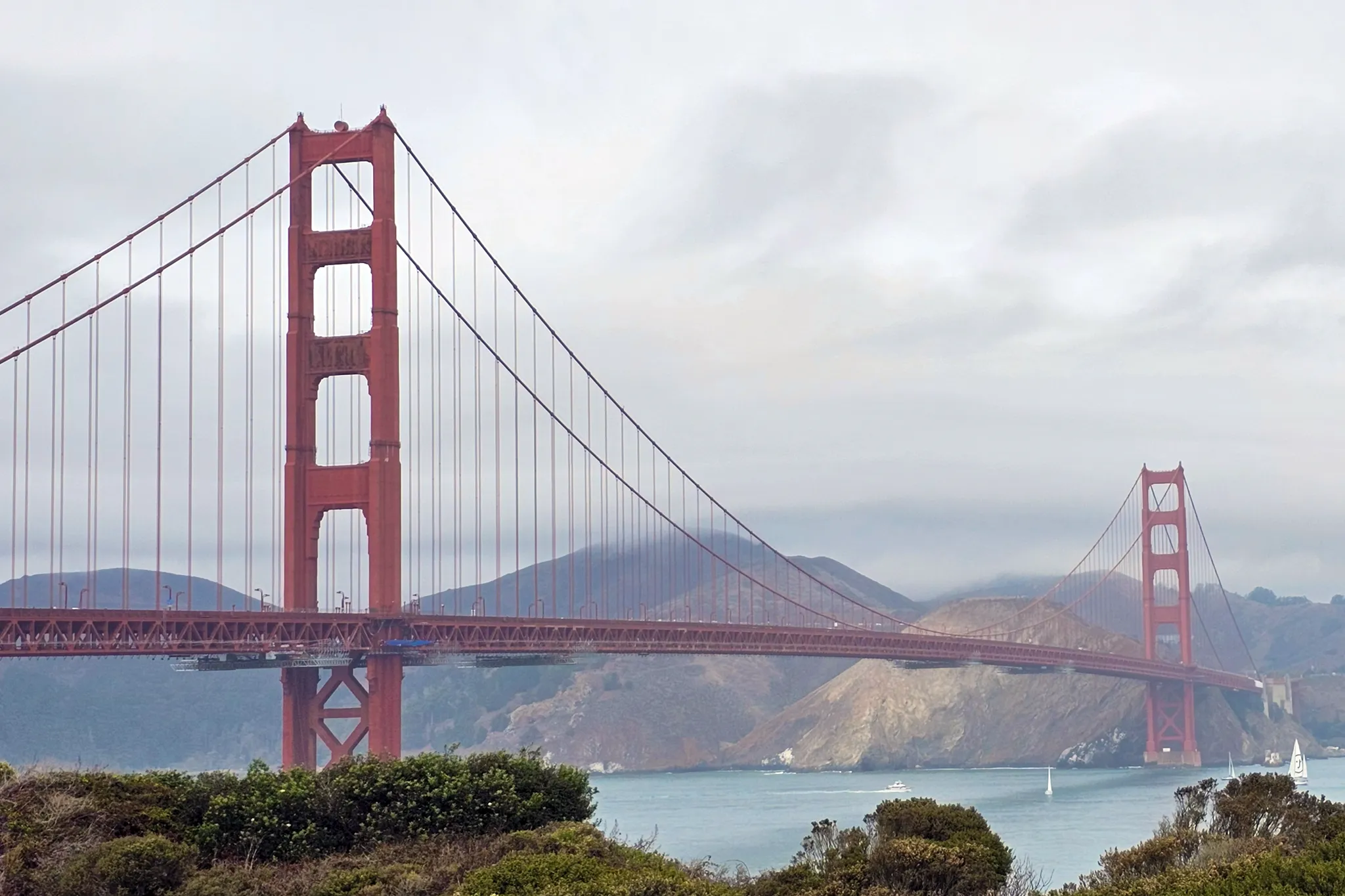
With every step, the tension in my feet fades, replaced by a sense of lightness — both physical and mental. The walk through San Francisco’s less polished side left a mark, but also opened my eyes. This city isn’t just bridges, cable cars, and postcard views. It’s a place of contrasts — beauty and neglect, wealth and emptiness, vibrant life and eerie silence.
From Beck’s Shoes, I keep walking. No longer searching, just absorbing. I pass murals that tell the stories of their neighborhoods, café windows where someone’s morning is just beginning. The city, though full of contradictions, has something magnetic about it. Something that turns even a simple walk into a story.
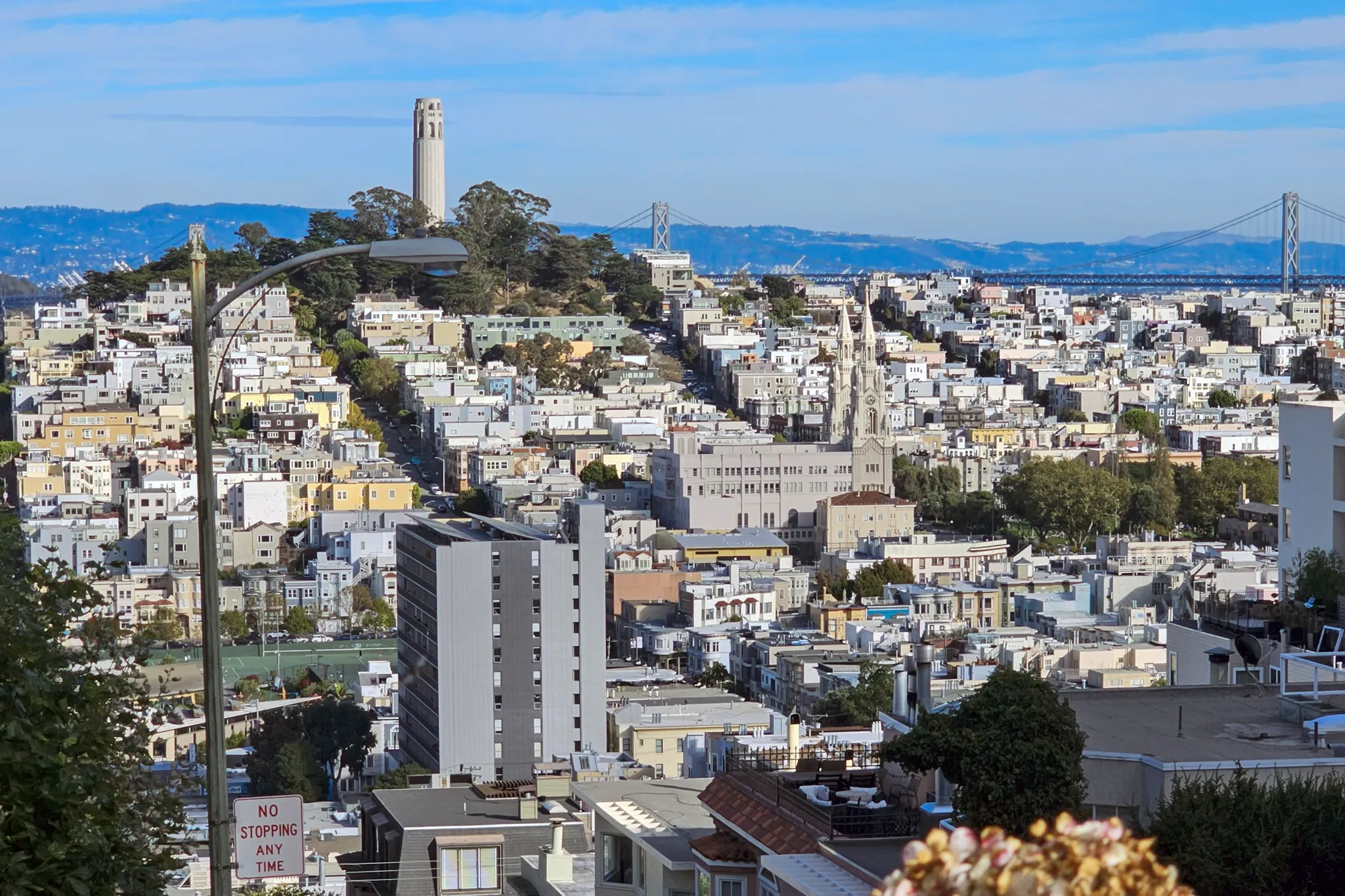
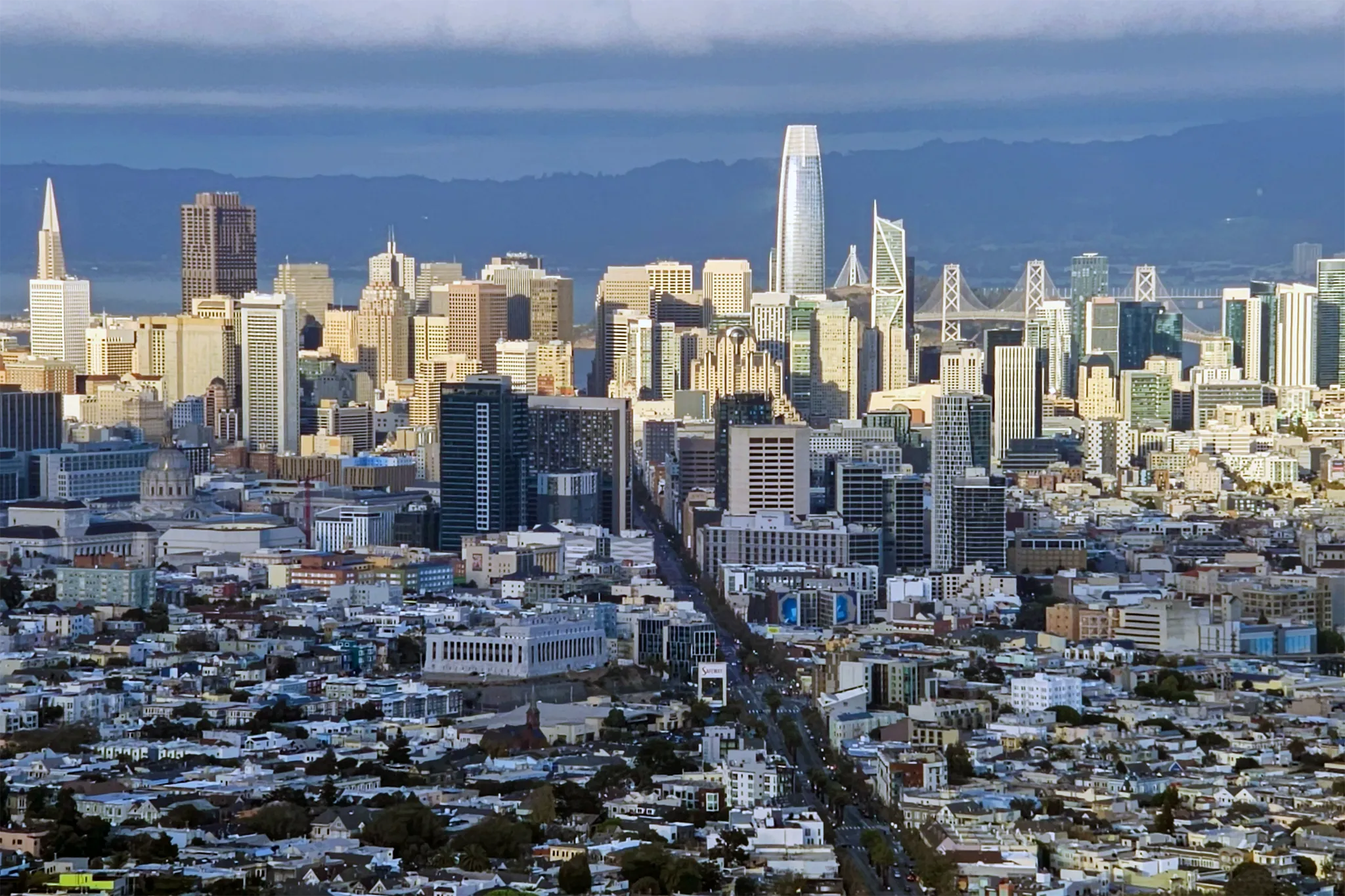
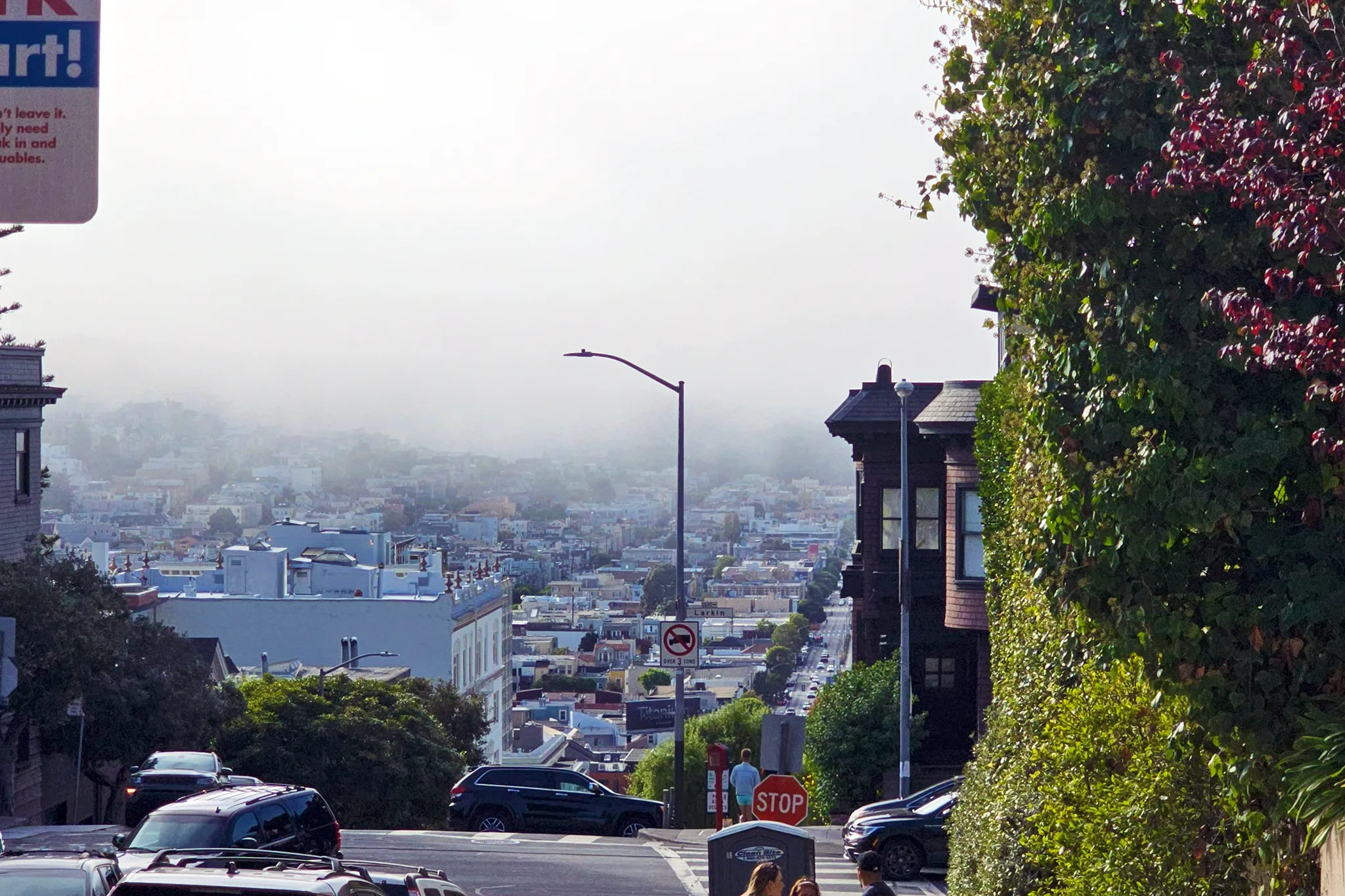
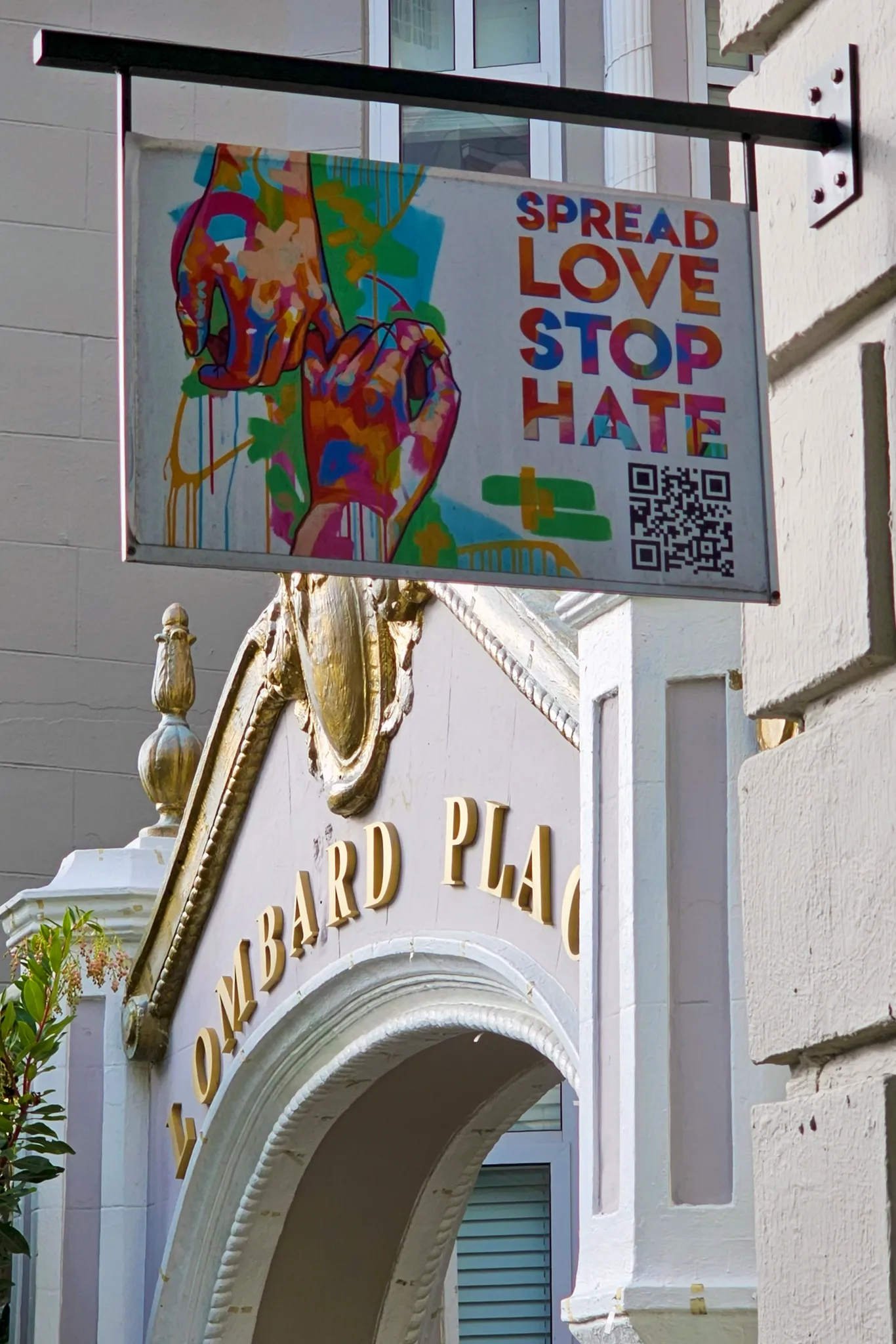
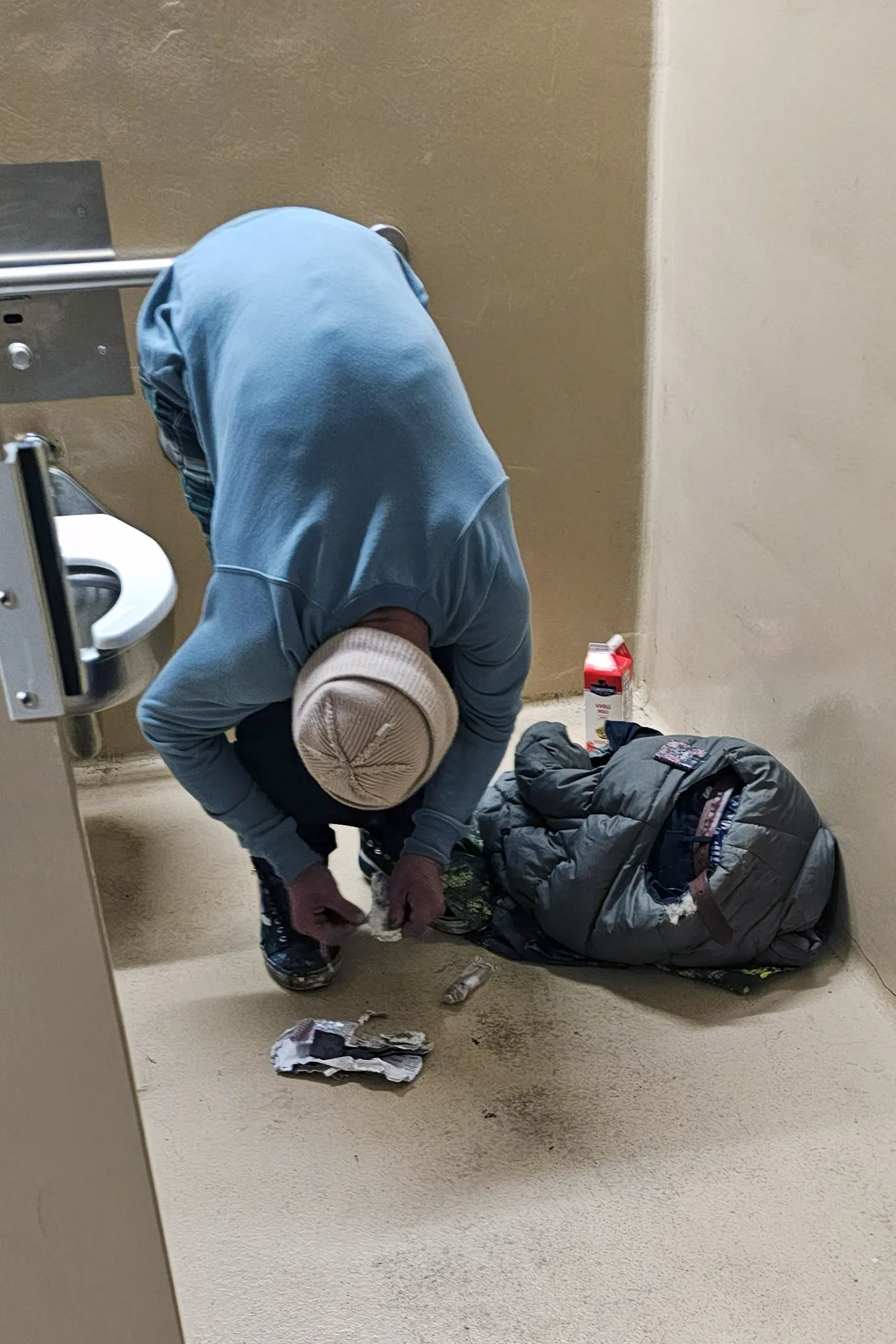
Crack and marijuana smell
The day in the city is coming to an end.
It’s not late yet, but I need to get to the Caltrain station and head back to Belmont, where I’m staying with family. I’ll take the train to the right stop and call them. Not ideal — my phone shows 15% battery, and I’ll need to check the map regularly (I’ve chosen to walk through the city).
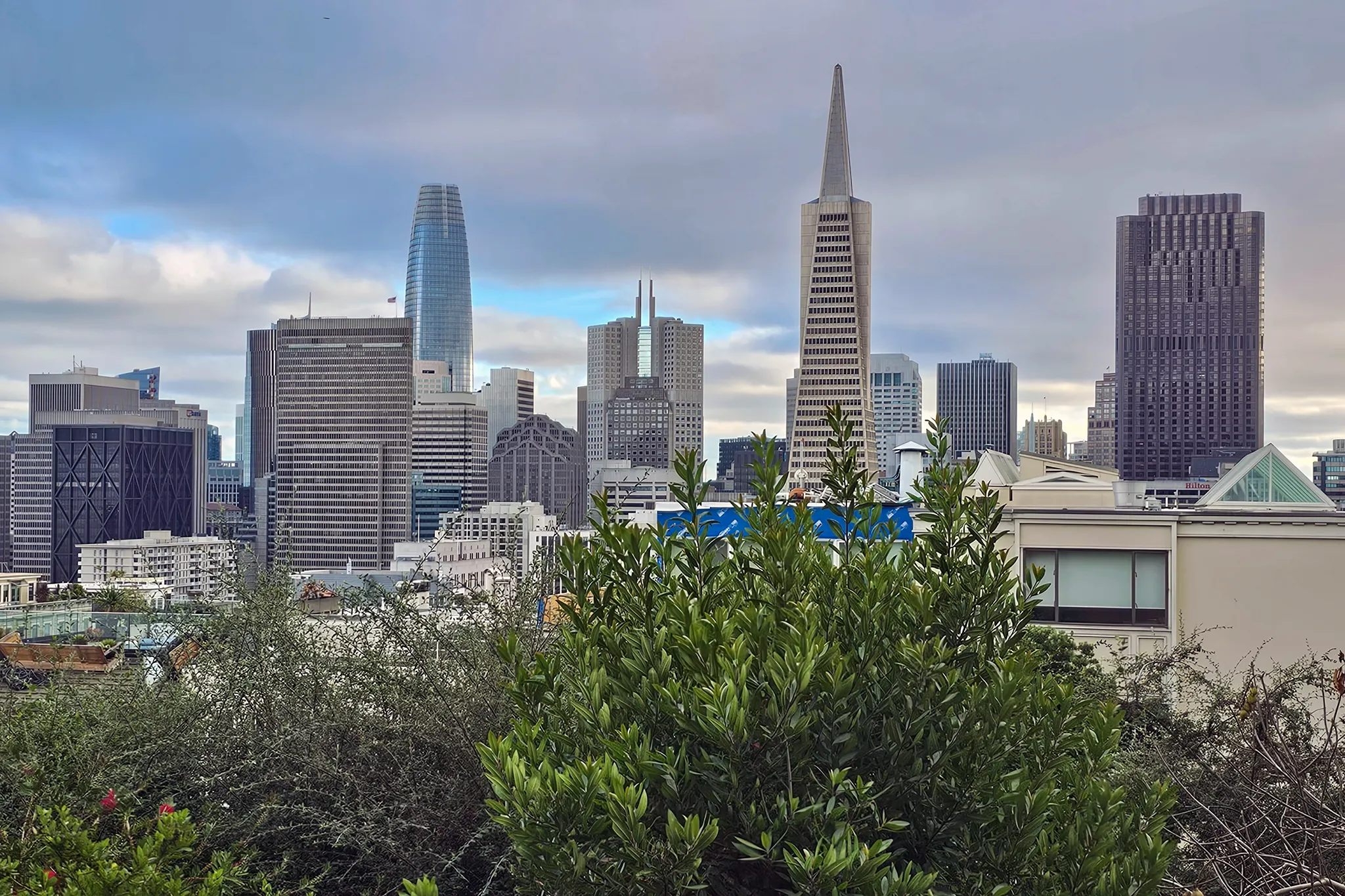
I leave the boarded-up district and head through downtown. Modern apartment blocks quickly give way to early 20th-century buildings. The deeper I go into the Tenderloin district, the more homeless people I see. The streets are lined with tents, inhabited by people who look worn down and lost. Some stand frozen in strange, unnatural poses (see one of the photos above). It’s the effect of fentanyl, which is widely used here. Those in earlier stages of addiction, with a bit more money, smoke crack and marijuana. The smell of both hangs heavy in the air.
Those who are still aware look at me like I don’t belong. Unfortunately, I’ve entered a part of Tenderloin where no matter which direction I go, it’ll take the same amount of time to leave. I have no choice but to keep moving toward the train station, trying to project confidence. It works — almost no one approaches me. Surprisingly, I don’t hear any requests for spare change.
There’s no police presence on these streets. Instead, I see colorful cars — mostly convertibles — blasting loud hip-hop. It feels like a scene from a gangster movie. Walking the sidewalks becomes difficult; I often have to step into the street to avoid the tents. Later, I’ll learn that the homeless population here numbers in the thousands. Other states, trying to manage similar issues, buy one-way tickets to California for problematic residents. Despite San Francisco’s chilly winters, most of them settle here.
After nearly an hour of weaving through densely populated streets, I reach the business district. The scene is similar, but now the crowd is made up of office workers heading home. I match their pace, blending into the flow. Few of them are heading toward the station, where a small group of homeless people holds sway. This tribe favors fentanyl — you can tell by the statuesque figures scattered around.
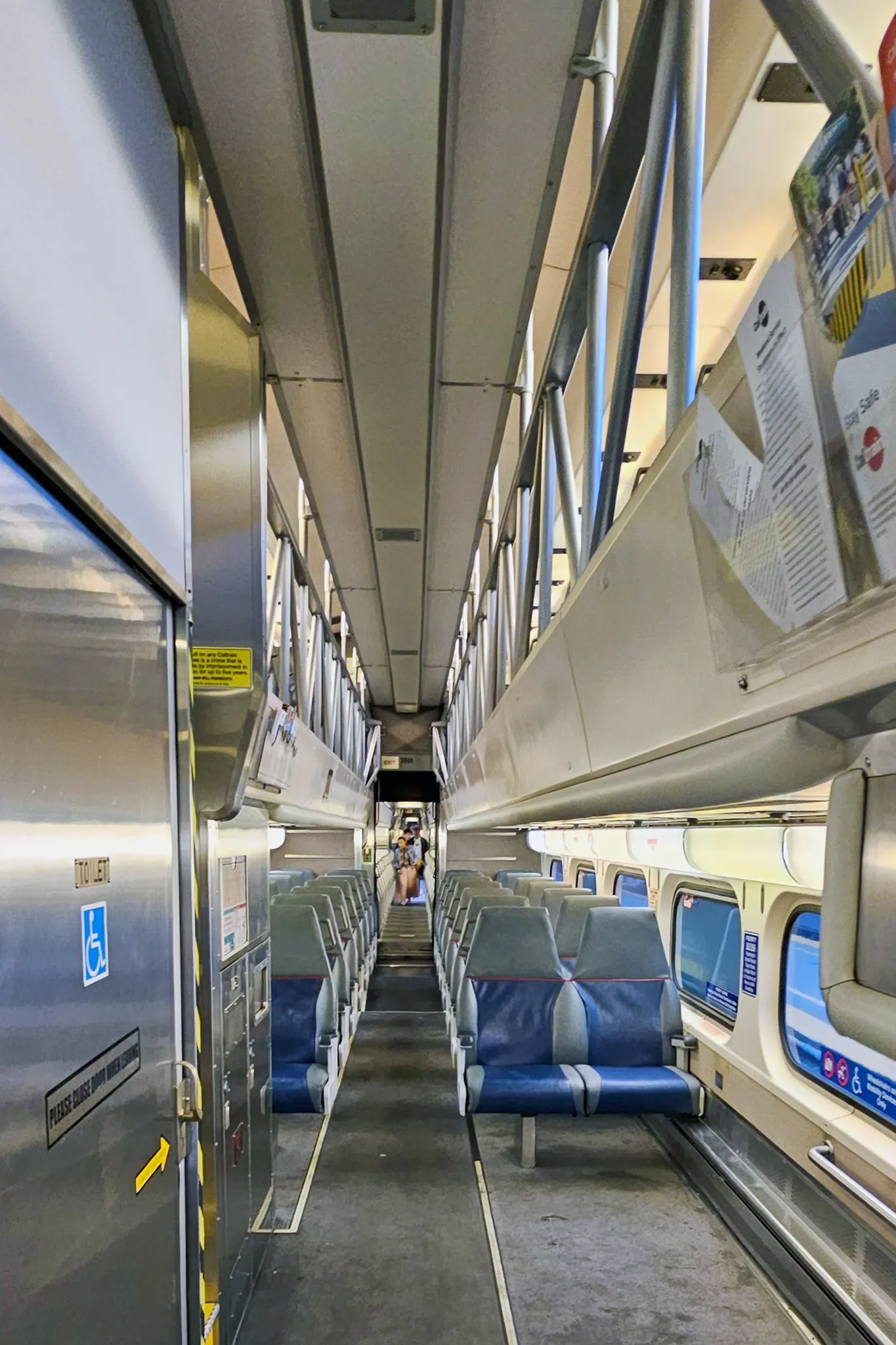
Finally, the train. You won’t find this level of comfort in Polish commuter rail. Check out the photos below. My phone shows 8% battery, and there are 20 minutes until departure. That should be enough. And it is. When I arrive at Belmont station, I still have 4% — just enough to call and say I’m waiting.
Next stop: Sacramento.
I’ve got a Greyhound ticket booked for the late morning. I’ll return to San Francisco in a few days — and I’ll be happy to share what I discover then.